How container drayage works at the Port of Vancouver
October 30, 2026 · Rolls Right
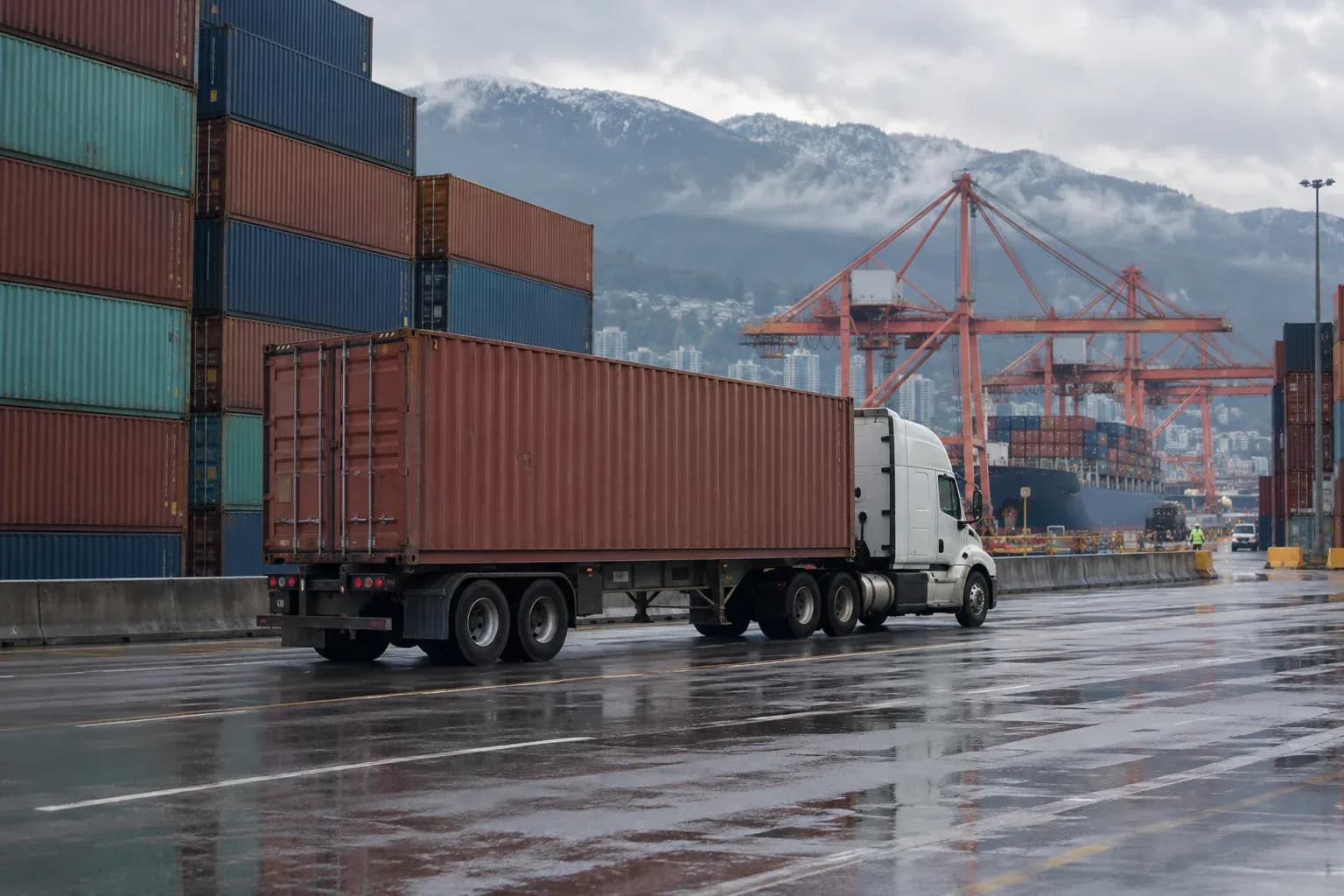
Drayage is the short truck move that takes an import container from a Port of Vancouver terminal or rail yard to the place where it gets unloaded. Before your container reaches your dock, three things have to happen. Its data has to be reported to the Canada Border Services Agency (CBSA). It has to show as available at the terminal. And a licensed truck needs a gate reservation to collect it. Any of those steps can hold a container up, and the port publishes data that shows where.
What drayage means for a Vancouver importer
Transport Canada's 2014 Recommendation Report on the British Columbia Lower Mainland ports defines drayage as the overland transport of cargo to or from barges or rail yards. For Vancouver it gives a narrower definition. A drayage trip is a truck picking up or delivering a container between a seaport and an off-dock point, with both ends of the trip in the Greater Vancouver Area. Off-dock points include warehouses, transload centres, rail yards and container storage yards.
That makes the dray the local leg. If your dock is in the Lower Mainland, the dray ends there. If the freight is going on to the Okanagan, Vancouver Island or Alberta, the dray can end at a warehouse near the port, and a highway truck takes the freight from there.
Where import containers move around the port
A container comes off the ship at one of the port's four container terminals:
Terminal | Operator | Location |
|---|---|---|
Centerm | DP World | Burrard Inlet, East Vancouver |
Vanterm | GCT | Burrard Inlet, East Vancouver |
Deltaport | GCT | Roberts Bank, Delta |
Fraser Surrey Docks | DP World | Fraser River, Surrey |
Centerm is the newest expansion. The port authority's Centerm Expansion Project, completed in 2023, raised the terminal's capacity from 900,000 to 1.5 million TEUs. That is an increase of about two-thirds, achieved while growing the terminal's footprint by only 15%.
From the terminal, the container leaves by truck for an off-dock point: a warehouse, a transload centre, a rail yard or a container storage yard.
Rail moves have their own data. The Port of Vancouver's Port insights page carries a daily container terminal rail performance report. For each terminal it shows import rail footage on dock, estimated planned car supply and actual rail car production. Rolls Right runs daily drayage and transload off the CN and CPKC ramps, and our rail intermodal page has the detail.
How an import container gets cleared to move
A container is ready for pickup once three things are true: its data has been reported to CBSA, it shows as available at the terminal, and a licensed truck has a gate reservation.
Reporting to CBSA
Under CBSA's Advance Commercial Information (ACI) program, every container has to be reported, whether it is full, empty or part of a consolidated shipment. This lets CBSA run its risk assessment before the cargo arrives. For marine cargo, the carrier transmits the cargo report. On a consolidated shipment, the freight forwarder also sends House Bill data for each individual shipment.
The data has to arrive within set timeframes. For containers loaded overseas, that is generally 24 hours before loading at the foreign port. CBSA can issue penalties under its Administrative Monetary Penalty System (AMPS) to carriers or forwarders that fail to report.
The carrier and the forwarder send these reports. Your part is to give them accurate shipment details early, especially when your freight shares a container with other shippers.
Who can pick it up
Only licensed trucks can collect containers from the terminals. A drayage company needs:
- an access agreement under the Vancouver Fraser Port Authority's Truck Licensing System (TLS), which sets truck age, safety and environmental standards
- a container trucking licence from the BC Container Trucking Commissioner
- a terminal reservation to pick up or deliver the container
Vancouver's container terminals have used mandatory appointment systems since 2005. Transport Canada's 2014 report described the problems drivers had with reservations at the time, including little visibility into how slots were allocated and the need to keep rechecking container availability.
Where the time goes between vessel and dock
Most delays happen at one of four points, and the port publishes data on each of them through its Port insights page.
Vessel arrival
The container vessel line-up is a daily summary, updated on weekdays, of vessels at berth and at anchor. It shows berth arrival dates, days at anchor and estimated time of arrival to berth. Port insights also reports monthly vessel on-time performance under the port's Container Vessel On-Time Incentive Program. A vessel counts as on time if it arrives within 8 hours of the start of its berth window.
Gate reservations
Reservation slots have been a pinch point for years. In 2014, Transport Canada found there were not enough slots to meet demand and that terminal gates filled up very quickly. A good dray provider books reservations as soon as a container shows as available, and uses night or off-peak gates where your receiving hours allow it.
Terminal gates and staging
The truck gate fluidity monitor on Port insights uses container truck GPS data to estimate truck waiting and flow times at the terminals in real time. A separate container truck performance page shows turn times in staging areas and terminals. It reports aggregated averages from TLS-licensed trucks, covers regular and speed gate reservations, and updates on Tuesdays.
Rail dwell
For freight moving by rail, the Port insights rail pages show dwell times by destination, along with forecasted volumes and rail production.
How to plan around it
- Check the vessel line-up for days at anchor before you set a receiving date.
- Ask your forwarder to confirm the container data has been sent, including the House Bill on consolidated freight.
- Tell your dray provider your receiving hours, so the gate reservation and your dock time can be matched.
- On the day of pickup, check the truck turn times and the port's live webcams of roads, rail and terminals.
Free time, demurrage and detention
The clock starts when your container is discharged, and delays get expensive once free time runs out. Three charges catch most importers:
Charge | Who sets it | What it covers |
|---|---|---|
Terminal storage | The terminal operator | Each day the container sits at the terminal after its free time ends |
Demurrage | The shipping line | Each day the loaded container stays inside the terminal past the line's free days |
Detention (per diem) | The shipping line | Each day the container is out of the terminal before the empty is returned |
Free days and daily rates vary by terminal, shipping line and contract. Check your booking or ask your forwarder for the last free day before you plan delivery. Then tell your dray provider, so pickup and the empty return can be scheduled before charges start.
A drop at your site saves the truck's waiting time, but the container still runs up detention until the empty goes back. Unload drops promptly.
How to choose what happens at your dock
You have three choices once the container is out of the terminal.
Option | What happens | Fits when |
|---|---|---|
Live unload | The truck waits at your dock while your crew empties the container, then takes the empty away | Your dock and crew are free at the delivery time |
Drop | The container stays on a chassis at your site, you unload on your own schedule, and the empty is collected later | You have yard room, and receiving is busy or hard to time |
Transload near the port | The container is unloaded at a warehouse near the port, and the freight moves on by trailer or goes into storage | The freight is heading further inland, or needs sorting or storage first |
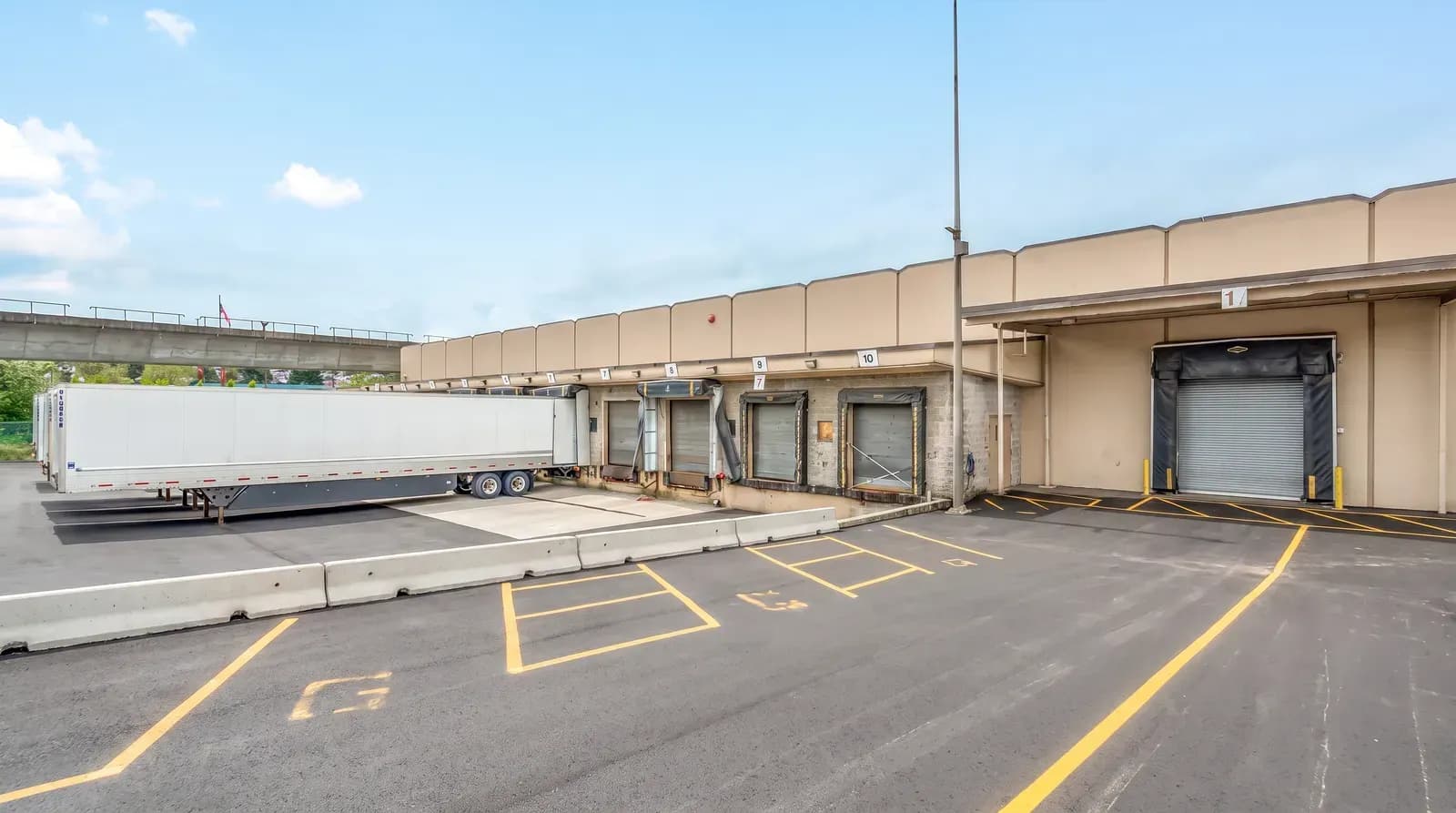
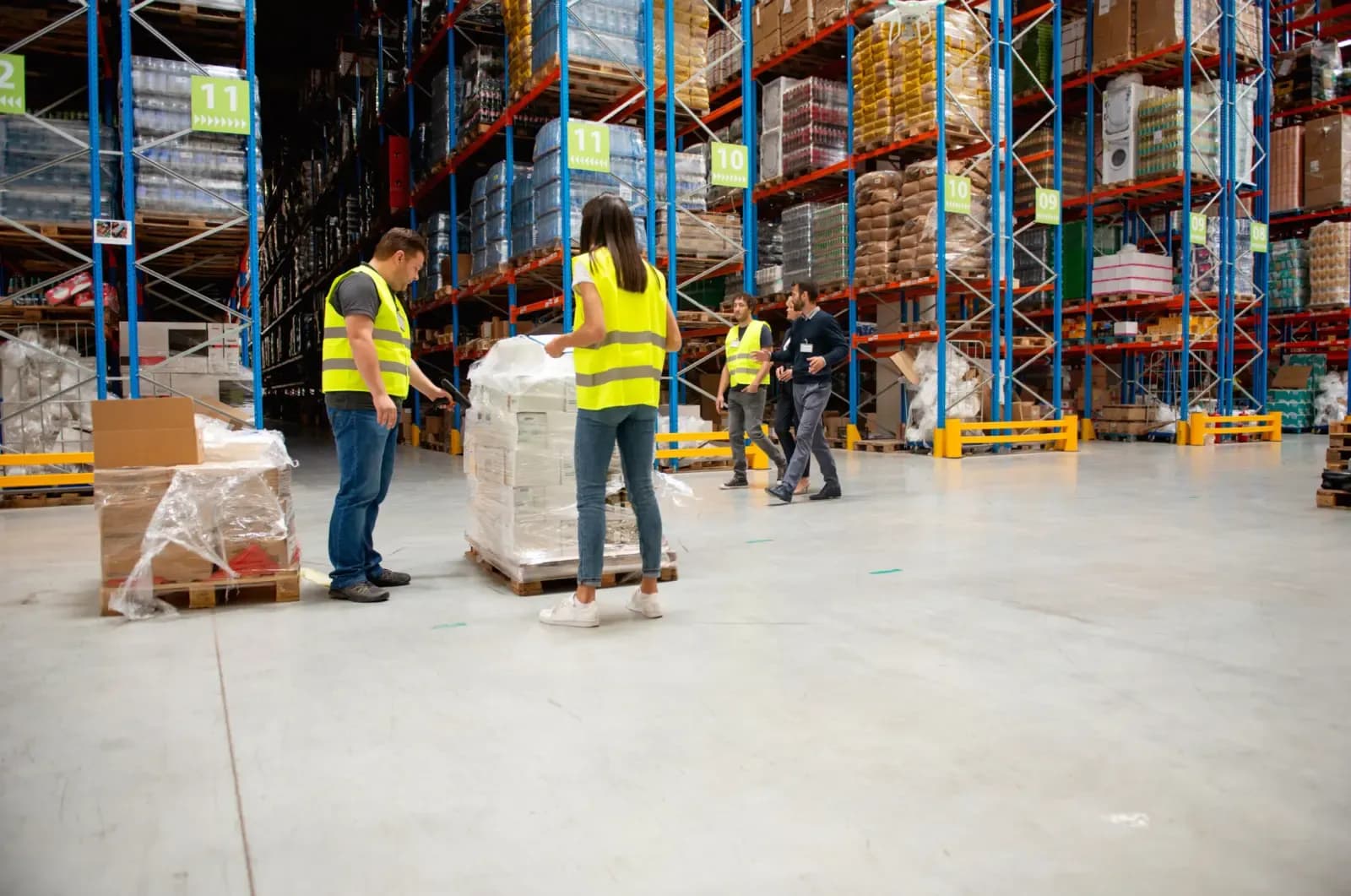
Transloading near the port suits BC and Alberta importers whose freight is heading inland or needs sorting before it ships. Rolls Right de-stuffs containers at our East Broadway warehouse in Vancouver, a 200,000+ sq ft facility with dock doors, cross-docking and a warehouse management system. From there, freight can go into storage, across a cross-dock, or onto our own trucks to Calgary, which run six days a week with a one-to-two-day transit.
Our Calgary warehouse has 100,000+ sq ft, 28-foot clear height and six dock doors. It handles receiving, cross-docking, container de-stuffing and storage.
What to have ready before you book a dray
- The container number and the vessel it is on
- The last free day, from your forwarder or booking
- Confirmation from your forwarder that the container data has been sent to CBSA
- The delivery address, plus the name of someone at the dock who can answer the phone
- Your receiving hours, including whether you can take a delivery outside the day shift
- Whether the container should be live unloaded, dropped, or transloaded near the port
- Where the freight goes after the container: your dock, storage in Vancouver, or onward to the Okanagan, Vancouver Island or Alberta
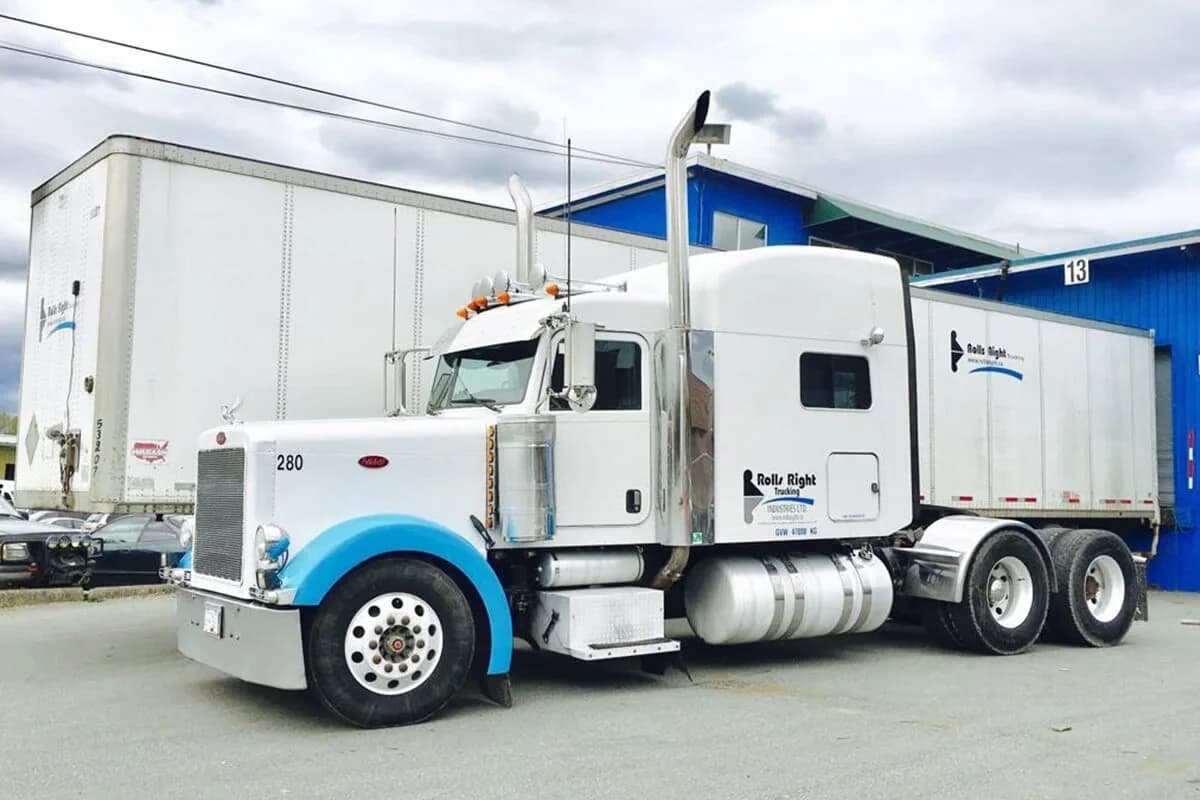
Rolls Right runs drayage and container transport at the Port of Vancouver with its own chassis and tractors. Dispatch answers 24/7, and every load is GPS-tracked. Send the details through our freight quote form.
Frequently asked questions
What is drayage in shipping?
Drayage is the short truck move of a container between a port or rail yard and its next stop, such as a warehouse or a transload centre. In Vancouver, both ends of a drayage trip are usually in the Lower Mainland.
How long does it take to get a container out of the Port of Vancouver?
Once a container is reported, available and has a gate reservation, the pickup itself is usually a same-day move. The variables are when the vessel berths, when a reservation slot opens, and how long trucks wait at the gate. You can check all three on the port's Port insights page. For freight going on to Alberta, Rolls Right's trucks reach Calgary in one to two days.
What is the difference between drayage and transloading?
Drayage moves the container itself by truck. Transloading unloads the container at a warehouse and moves the freight on by trailer or into storage. Transloading near the port lets the empty go back sooner and puts the freight into trailers sized for highway delivery.
What has to be reported to CBSA before an import container moves?
Every container, whether full, empty or consolidated, has to be reported electronically under CBSA's Advance Commercial Information program. The carrier sends the cargo report. On consolidated freight, the forwarder also sends House Bill data for each shipment.
Can a container be dropped at my warehouse and picked up empty later?
Yes, that is called a drop. The loaded container is left on its chassis, your crew unloads it on its own schedule, and a truck collects the empty afterward. You need yard room for the chassis, and the shipping line's detention charges keep running until the empty is returned.
Our drayage and container transport page covers what Rolls Right handles at the Port of Vancouver, from terminal pickup to de-stuffing.
Sources
- Canada Border Services Agency, Advance Commercial Information: marine mode (confirm the current CBSA URL before publishing)
- Canadian Trucking Alliance, CBSA Issues Industry Communique on Cargo Container Reporting Requirements, undated
- Port of Vancouver (Vancouver Fraser Port Authority), Centerm Expansion Project and South Shore Access Project
- Port of Vancouver (Vancouver Fraser Port Authority), Truck Licensing System
- Port of Vancouver (Vancouver Fraser Port Authority), Port insights, accessed October 2026
- Transport Canada, Recommendation Report: British Columbia Lower Mainland Ports, 2014-09-25
- Truck News, Canada, B.C. governments unveil new model for Port Metro Vancouver container trucking industry